One Codebase or Two? AppDevelopers.mobile’s Case for Cross-Platform App Development

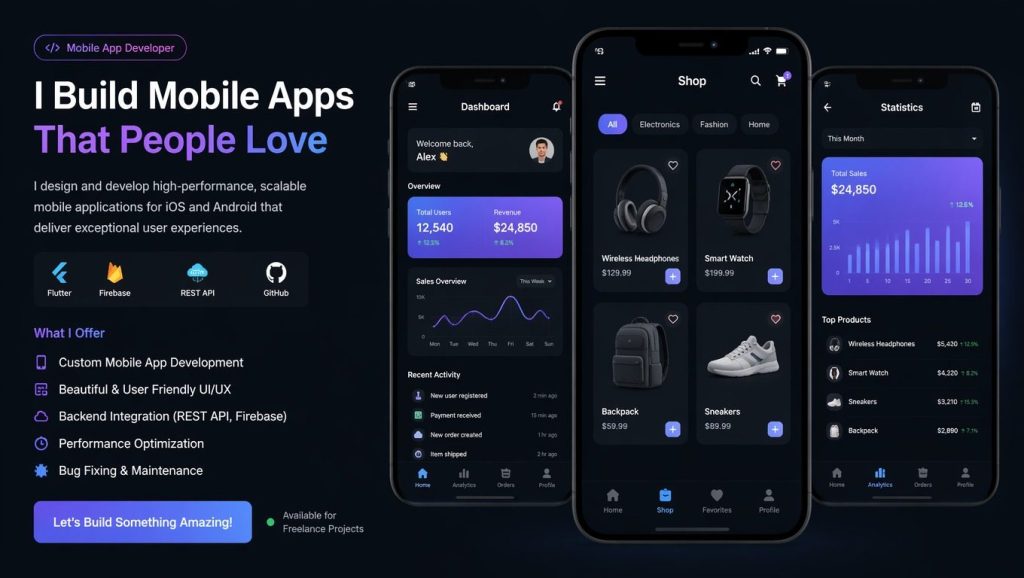
Building a mobile app for both iOS and Android has traditionally meant maintaining two separate codebases, one in Swift or Objective-C and another in Java or Kotlin. AppDevelopers.mobile, a Gurgaon-based app development company, offers an alternative through cross-platform frameworks including Flutter and React Native, alongside its native development services.
FAQ
What’s the difference between native and cross-platform app development?
Native development uses platform-specific languages — Swift or Objective-C for iOS, Java or Kotlin for Android — while cross-platform frameworks like Flutter and React Native allow a single codebase to run on both platforms, according to standard industry terminology.
Is cross-platform development always cheaper than native?
Generally, cross-platform development can reduce cost and timeline for many app types by avoiding duplicate development work, though performance-intensive or platform-specific features may still favor a native approach depending on the app’s requirements.
Does AppDevelopers.mobile recommend one approach over the other for every client?
Available information does not indicate the company defaults to a single approach; it offers both native and cross-platform development, suggesting the choice depends on project-specific factors rather than a fixed recommendation.
The Tradeoffs Between Approaches
Cross-platform frameworks have matured considerably in recent years, and Flutter and React Native are both used in production by companies of significant scale, addressing earlier-generation concerns about cross-platform performance and native look-and-feel. That said, apps with heavy device-specific functionality — advanced camera processing, certain AR features, or deep integration with platform-specific hardware — can still perform better or be easier to build using native development, a distinction that applies across the industry rather than being specific to any one development shop’s capabilities.
AppDevelopers.mobile’s technology list, according to the company, spans Android development in Java and Kotlin, iOS development in Swift and Objective-C, and cross-platform work in Flutter, React Native and .NET MAUI, alongside backend technologies including Node.js, Laravel, ASP.NET and Python. That breadth suggests the company positions itself to advise on the tradeoff between native and cross-platform approaches based on a specific project’s needs, though it has not published a stated framework or methodology for how it makes that recommendation to clients.
For businesses deciding between native and cross-platform development, discussing the app’s specific performance requirements, target platforms and long-term maintenance plans directly with a prospective team of Mobile app developers — whether at AppDevelopers.mobile or elsewhere — remains the most reliable way to determine which approach fits a given project, rather than defaulting to whichever option a vendor happens to specialize in most heavily.
Long-term maintenance costs can also differ between the two approaches, since a cross-platform codebase generally means one set of bugs to fix and one set of updates to ship across both platforms, while native development requires maintaining two separate codebases in parallel, each subject to its own platform-specific updates and potential compatibility issues over time. That maintenance difference can matter as much to total cost of ownership as the initial development timeline, particularly for apps expected to stay in active use and development for several years.
Team hiring availability is a more practical consideration that often gets overlooked during the native-versus-cross-platform decision: Flutter and React Native developers are generally more interchangeable across projects than specialists in native Swift or Kotlin development, which can affect how easily a business can find replacement developers later if a project outlives its original development team.

Reporting for Hindustan Hunt on news and stories from across India.