 By
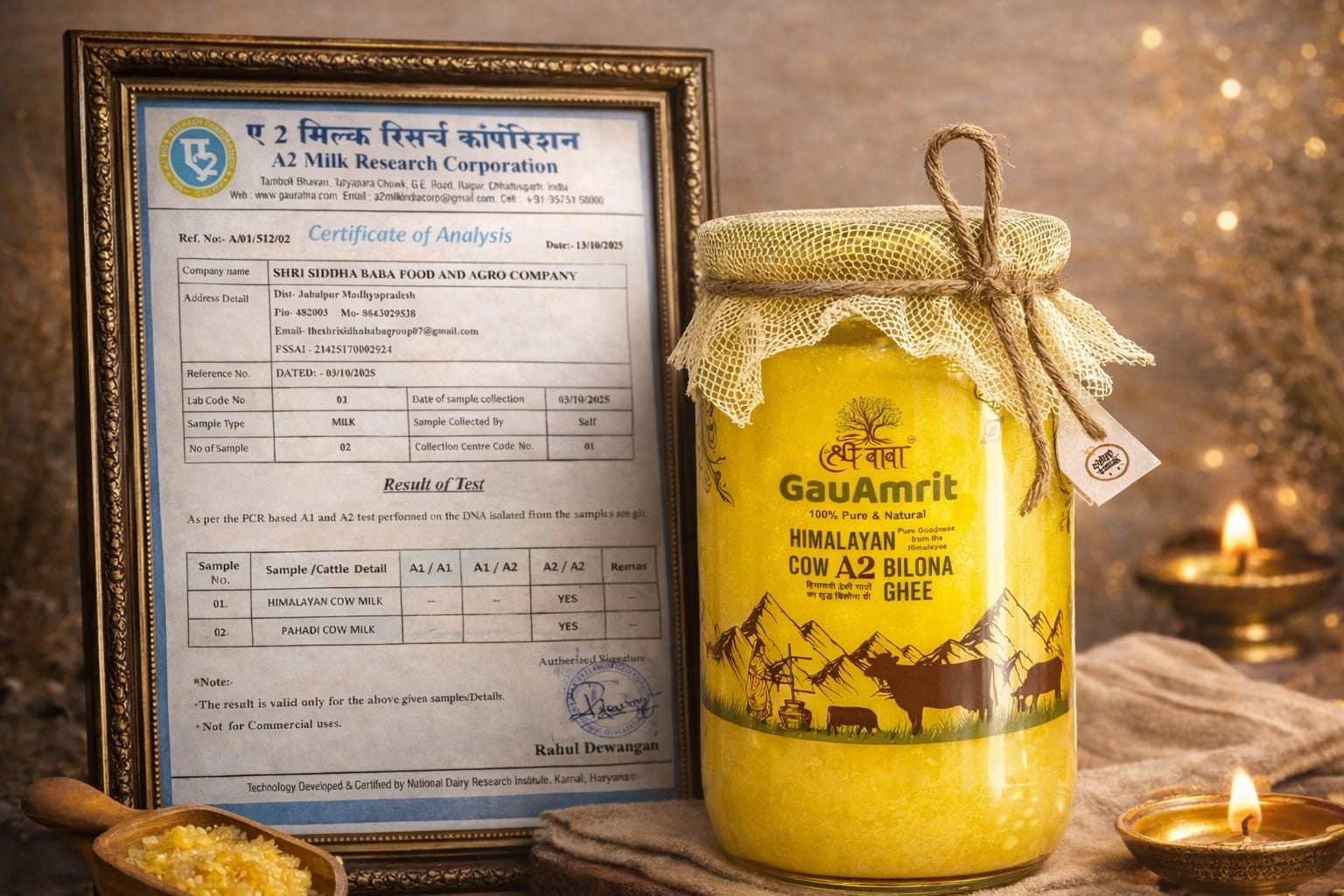
By Health-focused marketing around "A2" dairy products, including ghee sold under brands like GauAmrit from Shree Baba Food India, has grown significantly in India over the past decade, but the underlying science remains more contested than much of the consumer marketing around it suggests.
A2 refers to a specific variant of beta-casein protein found predominantly in milk from indigenous, or desi, cow breeds, as opposed to the A1 beta-casein variant more common in certain crossbred and Western dairy-cattle breeds. Proponents of A2 dairy products, including many Ayurvedic practitioners and desi-ghee marketers, have claimed A2 milk and ghee are easier to digest and less likely to trigger inflammatory or allergic responses than A1 dairy. However, India's Food Safety and Standards Authority (FSSAI) has previously stated that there is insufficient conclusive scientific evidence to support health-superiority claims for A2 milk over regular milk, and international nutrition reviews have similarly found the evidence for meaningful health differences between A1 and A2 dairy inconclusive or limited in scale.
What GauAmrit Claims, and What It Doesn't
Shree Baba Food India markets GauAmrit around purity, traditional production and desi-cow sourcing rather than making explicit medical claims, according to the company's own description of the product; it has not published specific digestibility or health-outcome studies tied to its own ghee. This positions GauAmrit's public marketing more conservatively than some of the broader A2-dairy health claims circulating in India's wellness and Ayurvedic-food marketing space generally. Founder Omm has described the company's focus as centered on purity and trust rather than specific health outcomes: "At Shree Baba, our aim is to bring authentic, natural and traditionally crafted food products to modern consumers while maintaining the values of purity, quality and trust."
Ghee's Established Nutritional Profile
Independent of the A1/A2 debate, ghee itself — as a form of clarified butter — is broadly recognized by nutritionists as a source of fat-soluble vitamins (A, D, E and K) and, unlike butter, contains negligible lactose and milk solids after clarification, making it suitable for many people with lactose sensitivity. These properties apply to ghee generally, not specifically to A2 or Bilona-method ghee, and are not unique differentiators for GauAmrit relative to other ghee brands.
A Category Where Caution Is Warranted
Nutrition researchers generally advise that ghee, regardless of A1/A2 status or production method, remains calorie-dense and high in saturated fat, meaning it should be consumed in moderation as part of a balanced diet rather than treated as a health product with unlimited daily benefit — guidance applicable to GauAmrit's ghee as it would be to any ghee product.
Frequently Asked Questions
Is A2 ghee scientifically proven to be healthier than regular ghee?
No conclusive scientific consensus supports this claim; FSSAI and several nutrition reviews have found the evidence for A2 dairy's health superiority over A1 dairy inconclusive.
What nutrients does ghee generally provide?
Ghee is a source of fat-soluble vitamins A, D, E and K and is largely free of lactose and milk solids after clarification, though it remains calorie-dense and high in saturated fat.