Where Architecture Meets the Wild Landscape of Jawai

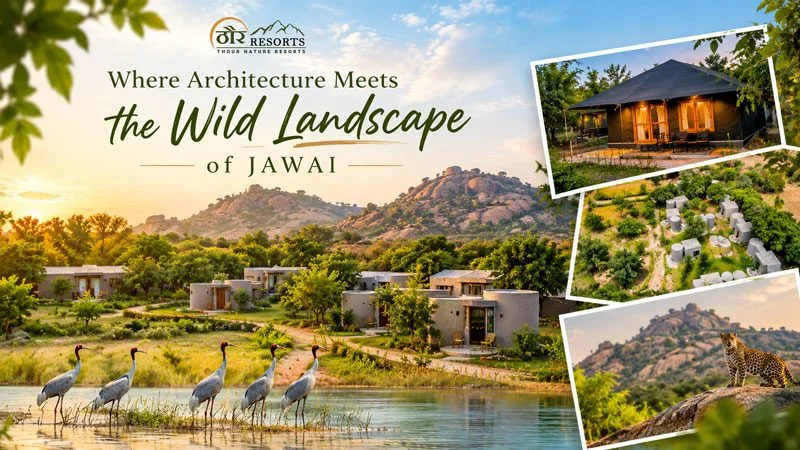
Jawai, Rajasthan — In Jawai, the landscape is not simply a backdrop to a stay. Weathered granite hills, rocky ridgelines and the changing colours of the Aravalli landscape shape how visitors experience this part of Rajasthan. Here, architecture has an opportunity to do more than provide shelter: it can influence how people connect with the terrain around them.
At Thour Nature Resorts Jawai, this relationship between built spaces and the natural environment is reflected in a distinctive feature of the property: a swimming pool built into the mountain. Alongside its tents, cottages and outdoor spaces, the pool offers a different perspective on how hospitality can respond to the character of its surroundings.
Architecture That Responds to the Landscape
The granite terrain around Jawai gives the region a visual identity unlike that of Rajasthan’s better-known desert destinations. Rock formations rise above the surrounding countryside, creating a landscape defined by texture, elevation and expansive views.
For hospitality properties in such settings, the challenge is to create comfortable accommodation without making the natural environment feel secondary. The relationship between the structure, the surrounding terrain and the open spaces becomes an important part of the visitor experience.
Thour Nature Resorts Jawai approaches this relationship through a mix of tented accommodation, cottages and outdoor facilities. Rather than relying on a single architectural feature to define the property, these different spaces offer visitors ways to experience the destination while enjoying the practical comforts of a resort stay.
The mountain-built swimming pool is a particularly distinctive element. Integrated into the rocky setting, it introduces a recreational space that draws attention to the terrain itself. Its appeal lies not only in its function as a swimming pool, but also in the way it connects the built environment with Jawai’s rugged landscape.
A Mountain-Built Pool with a Sense of Place
Swimming pools are common features of resort properties, but their relationship with the surrounding environment can vary considerably. In Jawai, where granite formations are central to the scenery, incorporating a pool into the mountain creates a more direct connection between architecture and terrain.
At Thour Nature Resorts Jawai, this feature provides a focal point within the property’s outdoor environment. The mountain setting distinguishes it from a conventional pool placed on a flat recreational deck and makes the surrounding landscape part of the visual experience.
The design also raises a broader question about destination hospitality: how can a built feature become part of a place’s identity rather than simply another amenity?
In Jawai, the answer begins with the landscape. Granite, open skies and the natural contours of the hills give the setting its character. Architectural elements that acknowledge these surroundings can help visitors notice the destination beyond the boundaries of their accommodation.
The mountain-built pool is one example of this approach at Thour Nature Resorts Jawai. Its significance within the property’s identity comes from its relationship with the terrain, rather than from claims about luxury or exclusivity.
Tents and Cottages Within the Jawai Setting
Accommodation is another part of the relationship between a resort and its environment. Thour Nature Resorts Jawai offers five tents and eleven cottages, providing different options for visitors exploring the Jawai region.
The tented accommodation brings a different atmosphere to a stay than a conventional cottage, while the cottages offer a more traditional enclosed room setting. Both allow guests to use the property as a base for experiencing the wider landscape.
Air-conditioned accommodation and private bathrooms provide practical comforts, while outdoor spaces offer opportunities to spend time beyond the room. The combination reflects an approach to hospitality in which the surrounding destination remains an important part of the stay.
For travellers interested in a Jawai Rajasthan stay, this balance between accommodation and environment can be as relevant as the room itself. The experience is shaped by the location, the design of the property and the opportunities available to explore the region.
Jawai’s Granite Hills: More Than a Scenic Backdrop
The natural setting around Jawai is closely associated with leopard habitat and the rocky formations of the Pali district. Unlike dense forest environments, these open granite hills provide a distinctive landscape for observing wildlife.
Leopard safaris are among the region’s recognised visitor experiences, but sightings depend on the movements of wild animals and cannot be guaranteed. Responsible wildlife observation requires patience, appropriate guidance and respect for the animals and their habitat.
The nearby Jawai Dam adds another dimension to the landscape. Its reservoir and surrounding areas attract birdlife, particularly during seasonal movements, and offer a contrast to the region’s dry, rocky terrain.
Together, the granite hills, Jawai Dam and surrounding countryside create a destination in which geological features and wildlife are closely connected. For visitors, these surroundings provide context for understanding why the area has developed a distinctive identity within Rajasthan’s nature-based tourism landscape.
A stay at Thour Nature Resorts Jawai places accommodation within this wider setting, connecting the experience of the property with the natural features that draw travellers to Jawai Bandh.
The Human Landscape: Rabari Culture and Wildlife
Jawai’s identity cannot be understood through geology and wildlife alone. The region is also associated with the Rabari pastoral community, whose traditional livelihoods include livestock herding across parts of Rajasthan and Gujarat.
The presence of leopards near human settlements has brought attention to the relationship between wildlife and local communities. That relationship is complex, shaped by local traditions, everyday livelihoods and the practical realities of sharing a landscape with wild predators.
For visitors, learning about Rabari culture can provide a wider understanding of Jawai beyond its wildlife experiences. Community visits, where available and arranged with appropriate consent, should give local people control over how their lives and traditions are represented.
This cultural context is also relevant to hospitality in the region. A destination-led approach involves recognising that local communities are part of Jawai’s living landscape, not simply an attraction to be presented to visitors.
For resorts operating in the area, respectful engagement with local culture can contribute to a more considered visitor experience, provided that cultural and community-related claims are supported by actual practices.
Hospitality Shaped by Place
The idea of nature-inspired hospitality is often expressed through views, outdoor spaces and references to the local environment. Its meaning becomes more tangible when the physical design of a property responds to the place in which it operates.
At Thour Nature Resorts Jawai, the mountain-built swimming pool, tented accommodation, cottages and outdoor areas provide several points of connection with the surrounding landscape. These features form part of the property’s identity within a destination known for its granite hills, wildlife and pastoral traditions.
The wider opportunity for hospitality in Jawai is to create stays that acknowledge the destination’s character without reducing it to a single attraction. Architecture can shape how visitors experience the setting, while responsible wildlife tourism and respectful cultural engagement can add context to the journey.
As travellers explore destinations beyond conventional city breaks and resort circuits, places such as Jawai offer a combination of natural scenery, wildlife observation and local cultural heritage. The built environment becomes one part of that experience, influencing how visitors spend time in and around the landscape.
Ultimately, the relationship between architecture and nature in Jawai is not about competing with the surroundings. It is about recognising the distinctive terrain, designing spaces that work within that setting and allowing the landscape to remain central to the experience.

Reporting for Hindustan Hunt on news and stories from across India.