 By
By The Monetary Policy Committee has six members and is headed by RBI Governor Sanjay Malhotra.
All six voted for the 25-basis-point hike, according to Forbes India.
Four members backed the shift in stance to calibrated tightening.
The decision was announced on October 7.
It is the first hike since February 2023.
The stance was changed from neutral to calibrated tightening.
The standing deposit facility and marginal standing facility rates were adjusted in line with the repo rate.
The RBI raised its FY27 inflation forecast to 5.2% from 5.0% in August.
It raised its FY27 GDP growth forecast to 7.1% from 6.7%.
Consumer price inflation was 4.8% in August, up from 4.5% in July, and core inflation was 4.2%, according to Forbes India.
Governor Sanjay Malhotra said rate cuts are off the table in the near term and that the next move can only be a hike or a pause, according to Forbes India.
Credit growth is running at about 19%, among the highest on record, according to the same report.
The backdrop is Brent crude near $100 a barrel, a weaker rupee and rate hikes by some other central banks, including the US Federal Reserve.
The repo rate was cut by a cumulative 125 basis points in 2025, from 6.5% to 5.25%, and was held at 5.25% for four consecutive meetings before this hike.
Business Standard’s poll had found that eight of 10 respondents expected a 25-basis-point hike.
The Sensex and Nifty had risen for two sessions into the decision, closing on October 6 at 73,067.81 and 22,776.10.
The repo rate is the rate at which the RBI lends short-term funds to banks, and loans linked to it tend to reprice when it changes.
On an illustrative Rs 50 lakh home loan over 25 years, a rise from 7.50% to 7.75% would raise the EMI by about Rs 810 a month, according to Business Today.
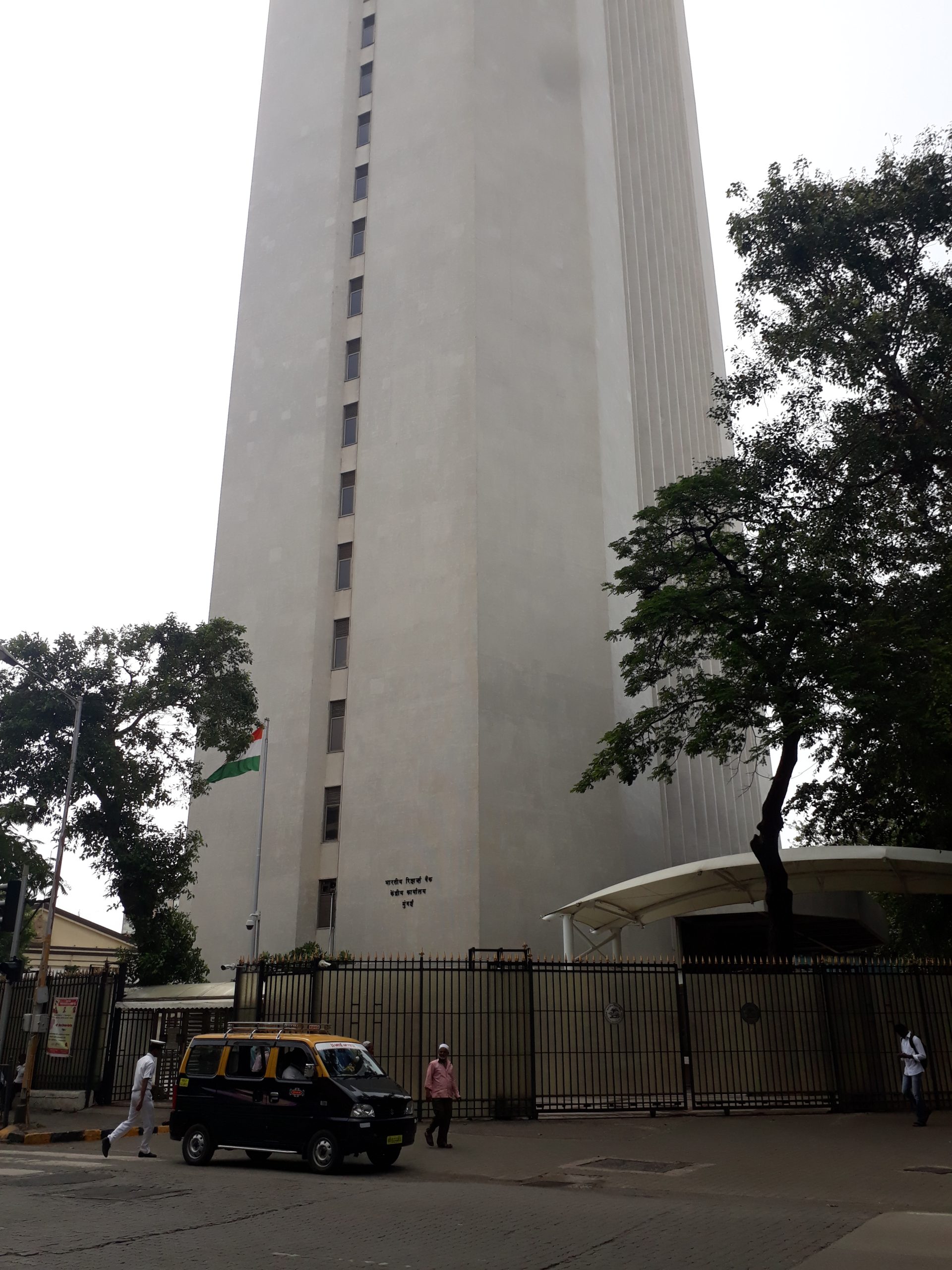
Reserve Bank of India building, Mumbai (file image), Wikimedia Commons, CC BY-SA 4.0